THE Halo
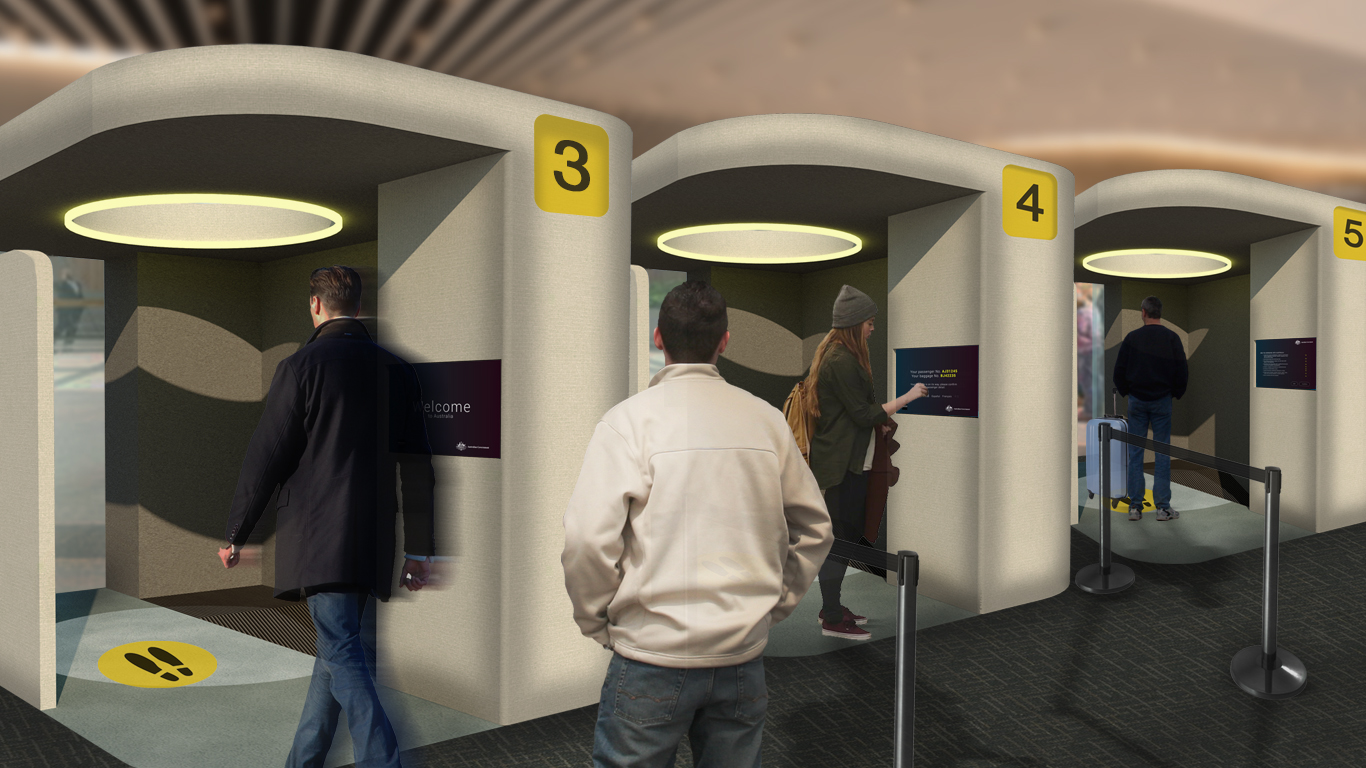
A checkpoint for Australian Border Security
As part of a Challenged Based Innovation (CBI) project, a team of DFM students devised a solution to address the United Nations Sustainable Development Goal 3 – good health and wellbeing. Attending a two-week intensive at science organisation CERN’s Ideasquare lab in Geneva, the team generated ideas for possible solutions. Their concept, HALO, is a border checkpoint designed to tackle the illicit drug trade in Australia.
TEAM ASE



THE CHALLENGE
The CBI program is a yearly collaboration between DFM and Switzerland-based science organisation CERN’s Ideasquare lab, along with other partner institutions in the Design Factory Global Network. Students are challenged to use design innovation to develop solutions that connect technology with societal needs. The concepts are framed around a United Nations Sustainable Development Goal (SDG) and utilise the latest technologies developed by CERN.
This year, our team of students explored SDG 3 ( good health and wellbeing) and how it could relate to their local context of Melbourne, Australia. They were tasked with making connections between the SDG and the potential of CERN technology, and develop a tangible solution with future strategies for long-term implementation throughout 2020, 2025 and 2030.
THE APPROACH
Team ASE decided to address Australia’s illicit drug trade as a way of improving health and wellbeing. Airports have been under fire recently, as airport staff and officers have been known to misuse their authority and aid in the smuggling of drugs. This is done through micro trafficking of drugs in smaller quantities or importing the drug’s raw material, making it hard to detect through current technology.
With police attention aimed at bulk seizures, micro-trafficking has become an increasing problem. However, trafficked amounts are sometimes too small to detect, providing an avenue for corruption to prevail. The team sought to address this issue in their project.
THE SOLUTION
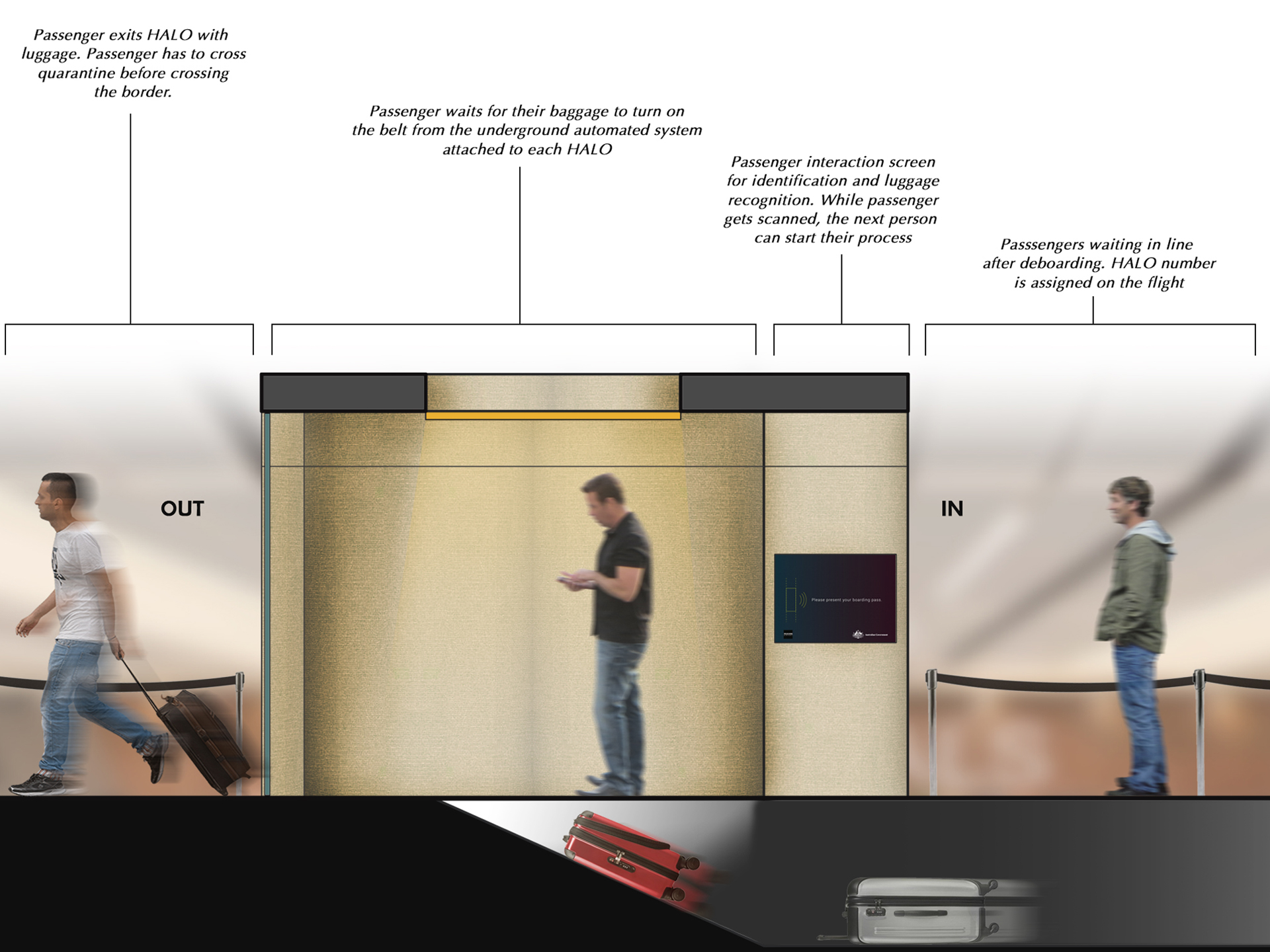
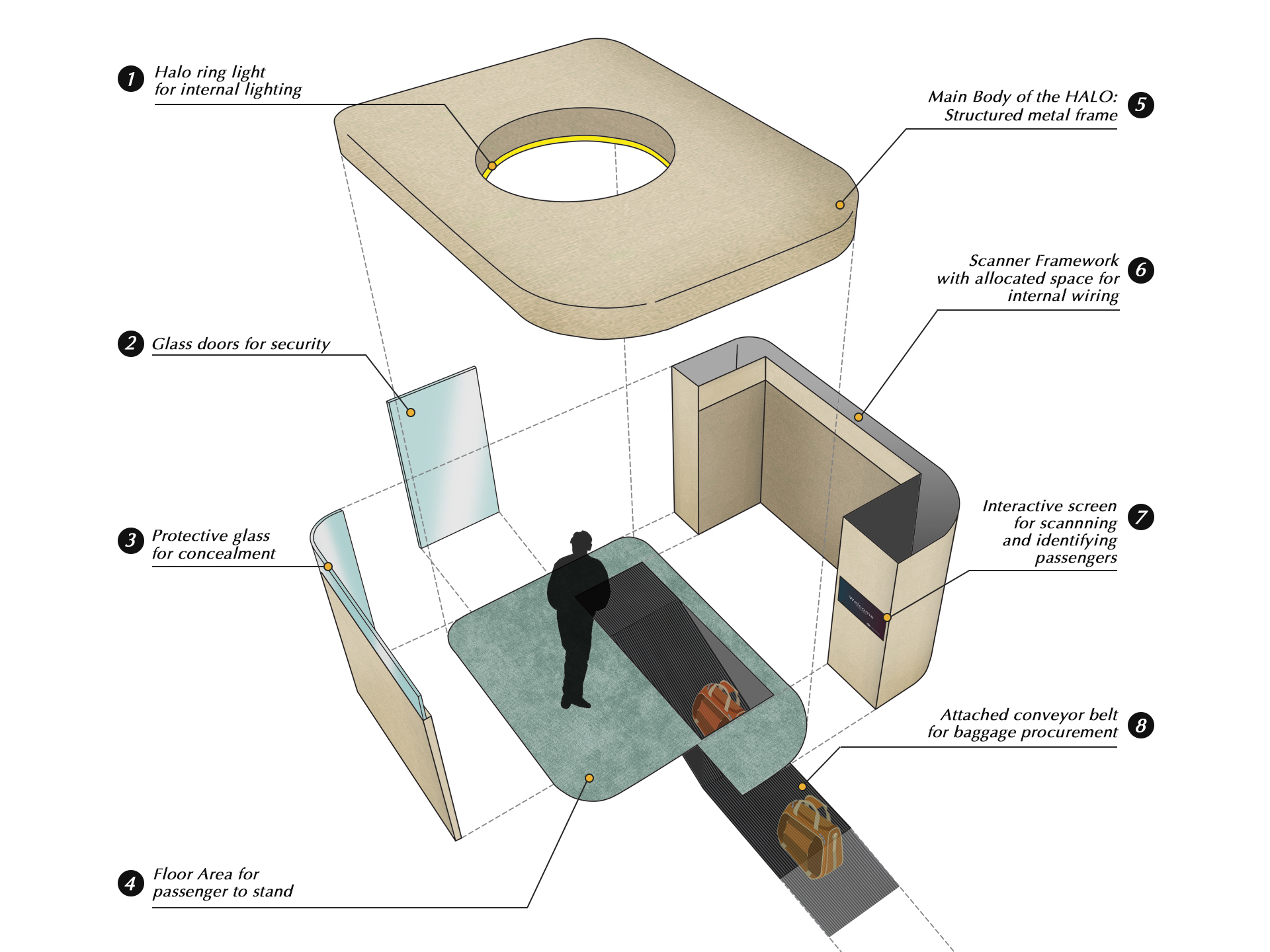
The HALO is a checkpoint designed for Australian Border Security, combining immigration, customs and declaration into a holistic solution. It helps in micro-imaging and scanning of incoming passengers, luggage, cargo and mail to identify any drugs crossing Australian borders through airports, ensuring minimal human intervention and negligence.
The HALO is built with CERN technology, allowing for the detection of illicit substances that might be carried on a passenger, in cargo or a corrupt officer by Medipix3 – a micro imaging device. ROOT – a data analysis technology – gathers data from Medipix3 and compares it to data already stored on the HALO system outlining illicit drugs through supervised machine learning.
With increased detection and seizure of illicit drugs at key entry points, Australia could potentially have a reduced illicit drug marketplace. With less access to these substances, the team hopes that Australian communities could see increased wellbeing through the reduction of addiction and overdoses.